
The Ripple Effect-One Act of Generosity
The Ripple Effect: One Act of Generosity Print Email Copy Link Download PDF ↑ The Ripple Effect: One Act of […]
The Ripple Effect: One Act of Generosity Print Email Copy Link Download PDF ↑ The Ripple Effect: One Act of […]
08/03/2025 AM Stewardship of Time and Priorities—Putting God First Print Email Download PDF Copy Link ↑ Stewardship of Time and
Leaving a Legacy of Faith—Blessing the Church for Years to Come Expand All Collapse All Print Email Download PDF Copy

The Importance of Christian Fellowship body { font-family: Arial, sans-serif; background-color: #FAF8F3; color: #22334C; margin: 20px; line-height: 1.6; } h1,

The Ripple Effect: One Act of Generosity – Study Guide The Ripple Effect: One Act of Generosity 2 Corinthians 9:6–8
Wedding Ceremony Customizer Wedding Ceremony Order of Service – Customizer Bride’s Name: Groom’s Name: Prelude (Guest Seating) Gentle instrumental music
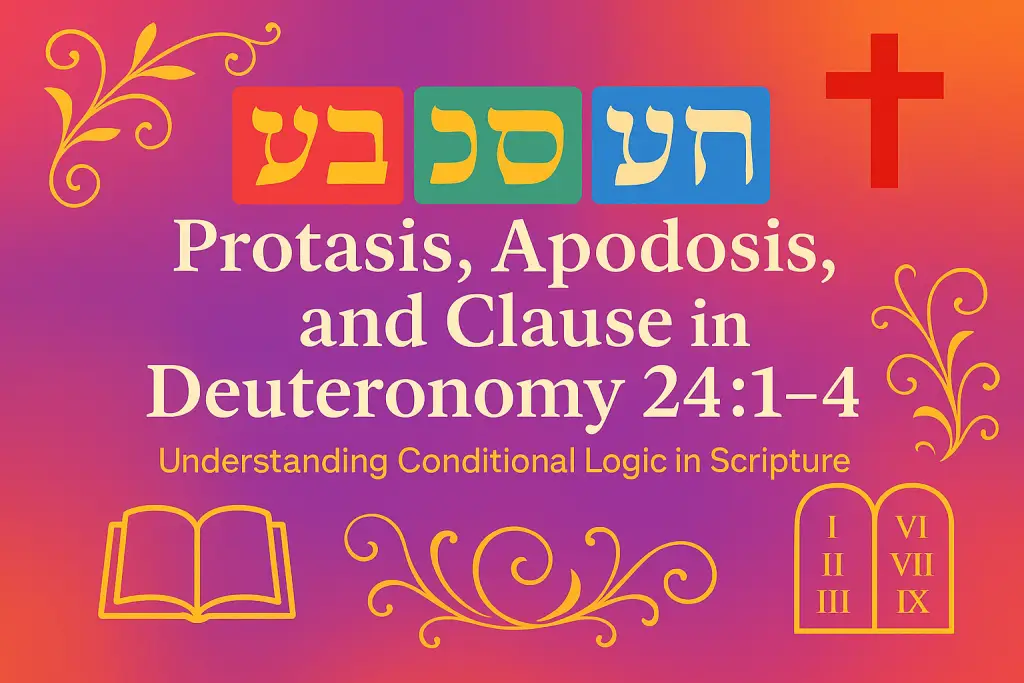
One of the greatest dangers facing Christians today is when people with a little academic vocabulary use it to defend teachings that directly contradict the plain structure of the Word of God. This study aims to clarify the crucial distinction in Deuteronomy 24:1–4: Moses did not command divorce; he described a situation and issued a restriction. Understanding this grammatical structure is essential for accurately interpreting Scripture and protecting the sacredness of marriage. Dive into this exploration to discover how clarity and faithfulness in reading the Word can transform our understanding of God’s intentions for marriage.
This article explores whether a divorced woman may remarry according to Deuteronomy 24 and Matthew 19, offering a careful comparison of Mosaic and New Testament law. It clarifies common misunderstandings about biblical divorce and remarriage, discusses the meaning of “some indecency” (ʿerwat dābār), and addresses the distinction Jesus draws in Matthew 19. The study guides readers through the text’s original context, its structure, and various interpretations, providing practical and doctrinal clarity on this important issue.
Muchos han usado Deuteronomio 24:1–4 para justificar el divorcio, pero una lectura cuidadosa revela otra realidad: este texto no aprueba el divorcio, lo regula. Moisés no mandó divorciarse; describió lo que ya ocurría y puso una prohibición legal para proteger la santidad del matrimonio. Este estudio explora cómo la estructura gramatical—protasis (condición) y apódosis (consecuencia)—cambia por completo la interpretación. Jesús mismo lo confirmó en Mateo 19: “por la dureza de vuestro corazón os permitió Moisés…”
Si queremos manejar con precisión la Palabra de verdad, debemos entender su forma, no solo su contenido. Este análisis muestra que fidelidad a la Escritura también significa fidelidad a su estructura.
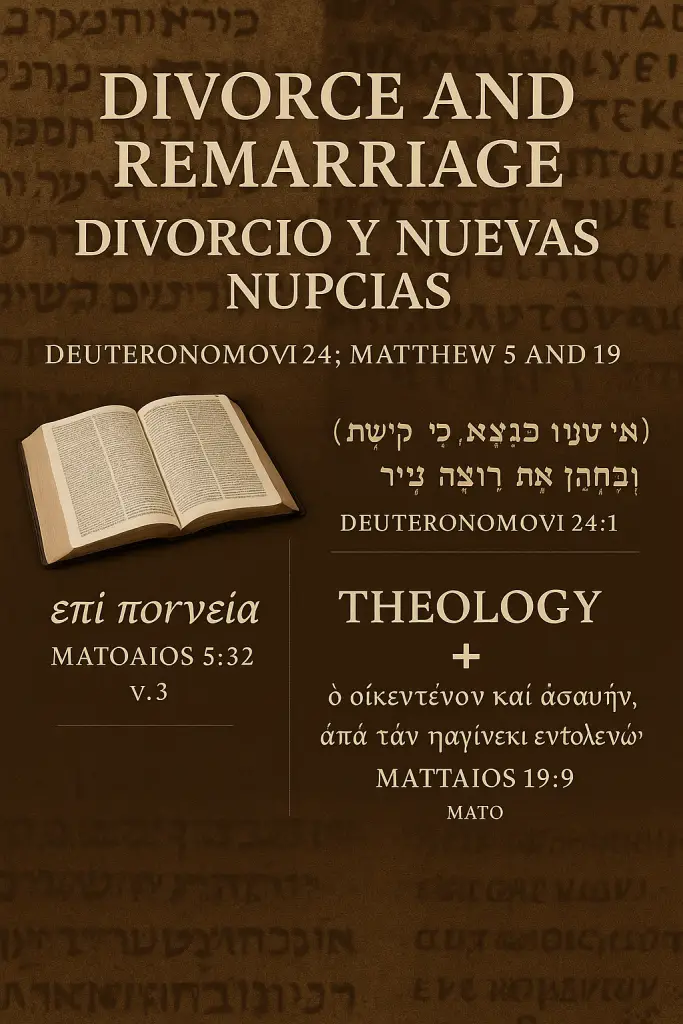
References for Study on Deut 24, Matt 5/19, ʿerwat dābār (Ed Rangel) References for Study on Deut 24, Matthew 5;